
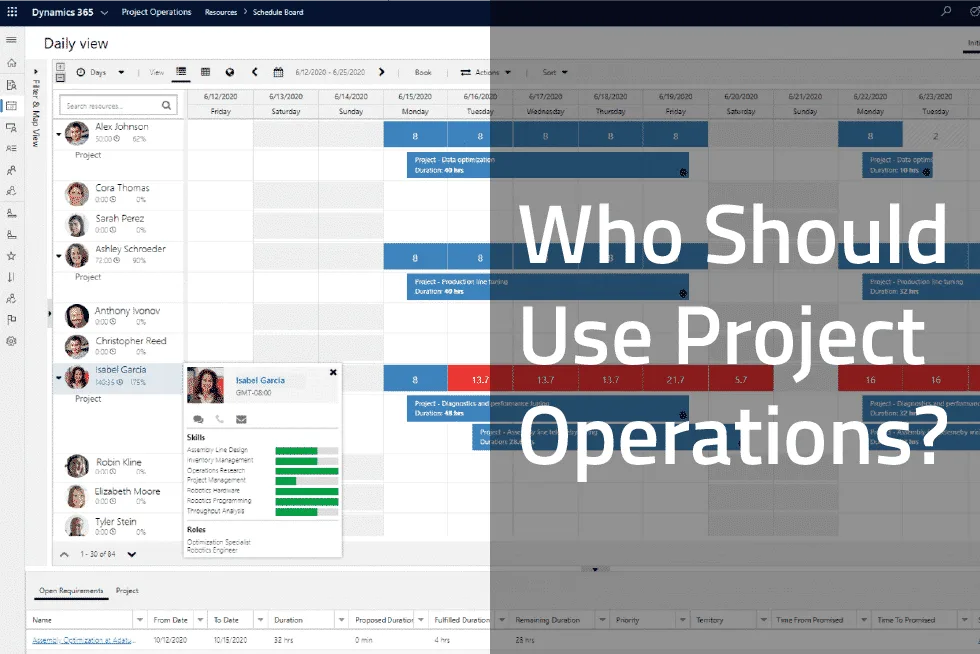
Microsoft Dynamics 365 Project Operations is a change and separation of the existing project management and accounting modules inside Dynamics 365 Finance as well as Project Service Automation (PSA). Going forward, the project functionality that used to come native to Dynamics 365 Finance and PSA is now merged into a separate SKU available as Project Operations.
LEARN MORE:

Who Should use Dynamics 365 Project Operations?
This is a great question. Especially if you can get a more capable project system for the same price. See below.
Project Operations
$135
user/m
Microsoft’s default project module for D365 Finance with standard project management capabilities with a single WBS structure and basic features. No upgrades or product expansions available.
Key Features
- Project scheduling (WBS)
- Resource & capacity management
- Quoting & Templates
- Costing & Budgeting
- Power BI reporting
vs.
PlanAutomate EPM
$135
user/m
Our core Enterprise Project Management (EPM) product has all the same project management functionality as Project Operations in a more capable system that’s embedded in D365 Finance. Plus, you gain the ability to grow into other features.
Key Features
- Project scheduling (WBS)
- Resource & capacity management
- Quoting & Templates
- Costing & Budgeting
- Power BI reporting
plus
- Faster performance for projects of any size
- Dedicated Cost Breakdown Structure (CBS) with periodization for better cost control
- Enhanced timesheets for streamlined time recording
- Change management controls
- Ability to add on advanced features as you need for your industry or business (see below)
+$USD per user per month paid yearly.
What if you need more than Project Operations can offer?
The longer and more complex your projects, the more you will need a solution that goes beyond what Project Operations can offer.
In short, if you are an AEC, project/ETO manufacturing, energy, biotech, aerospace, defense, or any project-driven company (what we call Project Business) trying to manage projects with various inputs, resources and that last longer than a month, you need to look beyond Project Operations. PlanAutomate is the smart choice because it can grow with your needs.
Why You Should Trust What We Say About Project Operations
PlanAutomate’s founder, Daniel Bevort, was the principal architect of the original Axapta ERP at Damgaard Data. As the story goes, Microsoft acquired Axapta for $1.6B and it became Microsoft Dynamics AX, which is now Dynamics 365 Finance.
It is because of our exclusive knowledge of Dynamics and Project Operations that we know it does not work for project business. Therefore, we have made it our mission to make Dynamics a business system for project-driven companies.
We have done detailed analysis of Project Operations and written a whitepaper with an honest assessment of its capabilities. See the table below for a taste. We have also written several articles on Project Operations that go through various functions that project businesses need and where Project Operations falls short.
|
Project Operations
Microsoft
-
|
PlanAutomate EPM
Base
€135 /mo
|
ETO Manufacturing
Add-on
€60 /mo
|
Construction
Add-on
€60 /mo
|
Professional Services
Add-on
€60 /mo
|
Insight & Analysis
Add-on
€30 /mo
|
Governance
Add-on
€30 /mo
|
Advanced PM
Add-on
€60 /mo
|
Project Modeling
Add-on
€20 /mo
|
Risk Management
Add-on
€20 /mo
|
|
|---|---|---|---|---|---|---|---|---|---|---|
| Insights and analysis | ||||||||||
| Power BI cubes |
✓*
|
✓
|
✕ | ✕ | ✕ | ✕ | ✕ | ✕ | ✕ | ✕ |
| Embedded Power BI reports | ✕ |
✓
|
✕ | ✕ | ✕ | ✕ | ✕ | ✕ | ✕ | ✕ |
| Portfolio analytics | ✕ | ✕ | ✕ | ✕ | ✕ |
✓
|
✕ | ✕ | ✕ | ✕ |
| Portfolio performance | ✕ | ✕ | ✕ | ✕ | ✕ |
✓
|
✕ | ✕ | ✕ | ✕ |
| Performance index | ✕ | ✕ | ✕ | ✕ | ✕ |
✓
|
✕ | ✕ | ✕ | ✕ |
| PlanVector AI | ✕ | ✕ | ✕ | ✕ | ✕ |
✓
|
✕ | ✕ | ✕ | ✕ |
| Planning | ||||||||||
| Work Breakdown Structure (WBS) |
✓*
|
✓
|
✕ | ✕ | ✕ | ✕ | ✕ | ✕ | ✕ | ✕ |
| Gantt & drag and drop |
✓*
|
✓
|
✕ | ✕ | ✕ | ✕ | ✕ | ✕ | ✕ | ✕ |
| Critical path and float |
✓*
|
✓
|
✕ | ✕ | ✕ | ✕ | ✕ | ✕ | ✕ | ✕ |
| Task network |
✓*
|
✓
|
✕ | ✕ | ✕ | ✕ | ✕ | ✕ | ✕ | ✕ |
| Role and resource scheduling |
✓*
|
✓
|
✕ | ✕ | ✕ | ✕ | ✕ | ✕ | ✕ | ✕ |
| Capacity management |
✓*
|
✓
|
✕ | ✕ | ✕ | ✕ | ✕ | ✕ | ✕ | ✕ |
| Soft/hard commit |
✓
|
✓
|
✕ | ✕ | ✕ | ✕ | ✕ | ✕ | ✕ | ✕ |
| Auto assign resources |
✓
|
✓
|
✕ | ✕ | ✕ | ✕ | ✕ | ✕ | ✕ | ✕ |
| Task and Gantt filtering | ✕ |
✓
|
✕ | ✕ | ✕ | ✕ | ✕ | ✕ | ✕ | ✕ |
| Task workflow | ✕ |
✓
|
✕ | ✕ | ✕ | ✕ | ✕ | ✕ | ✕ | ✕ |
| Custom grid views | ✕ |
✓
|
✕ | ✕ | ✕ | ✕ | ✕ | ✕ | ✕ | ✕ |
| Activity backlog | ✕ |
✓
|
✕ | ✕ | ✕ | ✕ | ✕ | ✕ | ✕ | ✕ |
| WBS sensor points | ✕ |
✓
|
✕ | ✕ | ✕ | ✕ | ✕ | ✕ | ✕ | ✕ |
| Manual tasks | ✕ | ✕ |
✓
|
✓
|
✓
|
✕ | ✕ |
✓
|
✕ | ✕ |
| Material planning | ✕ | ✕ |
✓
|
✓
|
✕ | ✕ | ✕ | ✕ | ✕ | ✕ |
| Material constraints | ✕ | ✕ |
✓
|
✓
|
✕ | ✕ | ✕ | ✕ | ✕ | ✕ |
| What-if simulation | ✕ | ✕ |
✓
|
✓
|
✕ | ✕ | ✕ |
✓
|
✕ | ✕ |
| Capacity leveling | ✕ | ✕ |
✓
|
✕ |
✓
|
✕ | ✕ |
✓
|
✕ | ✕ |
| Task driven serviceline and line property | ✕ | ✕ |
✓
|
✕ |
✓
|
✕ | ✕ |
✓
|
✕ | ✕ |
| Custom project/role/task attributes | ✕ | ✕ |
✓
|
✕ |
✓
|
✕ | ✕ |
✓
|
✕ | ✕ |
| Baselines | ✕ | ✕ | ✕ | ✕ | ✕ | ✕ | ✕ |
✓
|
✕ | ✕ |
| Embedded projects (WBS) | ✕ | ✕ | ✕ | ✕ | ✕ | ✕ | ✕ |
✓
|
✕ | ✕ |
| Constraint types | ✕ | ✕ | ✕ | ✕ | ✕ | ✕ | ✕ |
✓
|
✕ | ✕ |
| Gateway reviews and deadline management | ✕ | ✕ | ✕ | ✕ | ✕ | ✕ | ✕ |
✓
|
✕ | ✕ |
| Task tags | ✕ | ✕ | ✕ | ✕ | ✕ | ✕ | ✕ |
✓
|
✕ | ✕ |
| Project calendar | ✕ | ✕ | ✕ | ✕ | ✕ | ✕ | ✕ |
✓
|
✕ | ✕ |
| Project phases | ✕ | ✕ | ✕ | ✕ | ✕ | ✕ | ✕ |
✓
|
✕ | ✕ |
| Schedule backwards from finish | ✕ | ✕ | ✕ | ✕ | ✕ | ✕ | ✕ |
✓
|
✕ | ✕ |
| Estimation | ||||||||||
| Budget versions |
✓*
|
✓
|
✕ | ✕ | ✕ | ✕ | ✕ | ✕ | ✕ | ✕ |
| Templates |
✓
|
✓
|
✕ | ✕ | ✕ | ✕ | ✕ | ✕ | ✕ | ✕ |
| Create from quote |
✓
|
✓
|
✕ | ✕ | ✕ | ✕ | ✕ | ✕ | ✕ | ✕ |
| Create from existing project |
✓
|
✓
|
✕ | ✕ | ✕ | ✕ | ✕ | ✕ | ✕ | ✕ |
| Approvals |
✓
|
✓
|
✕ | ✕ | ✕ | ✕ | ✕ | ✕ | ✕ | ✕ |
| Copy from WBS |
✓
|
✓
|
✕ | ✕ | ✕ | ✕ | ✕ | ✕ | ✕ | ✕ |
| Import/Export XML | ✕ |
✓
|
✕ | ✕ | ✕ | ✕ | ✕ | ✕ | ✕ | ✕ |
| Cashflow | ✕ |
✓
|
✕ | ✕ | ✕ | ✕ | ✕ | ✕ | ✕ | ✕ |
| Qty budgets | ✕ | ✕ |
✓
|
✓
|
✕ | ✕ | ✕ | ✕ | ✕ | ✕ |
| Retainers | ✕ | ✕ | ✕ | ✕ |
✓
|
✕ | ✕ | ✕ | ✕ | ✕ |
| Models | ✕ | ✕ | ✕ | ✕ | ✕ | ✕ | ✕ | ✕ |
✓
|
✕ |
| Cost breakdown structure | ||||||||||
| Embedded projects (CBS) |
✓
|
✓
|
✕ | ✕ | ✕ | ✕ | ✕ | ✕ | ✕ | ✕ |
| Posting status | ✕ |
✓
|
✕ | ✕ | ✕ | ✕ | ✕ | ✕ | ✕ | ✕ |
| EVA principles | ✕ | ✕ | ✕ | ✕ | ✕ | ✕ | ✕ |
✓
|
✕ | ✕ |
| Cost codes & cost code reporting | ✕ | ✕ | ✕ | ✕ | ✕ | ✕ | ✕ |
✓
|
✕ | ✕ |
| Period close | ✕ | ✕ | ✕ | ✕ | ✕ | ✕ | ✕ |
✓
|
✕ | ✕ |
| Costing sheet | ||||||||||
| Cost (view) |
✓
|
✓
|
✕ | ✕ | ✕ | ✕ | ✕ | ✕ | ✕ | ✕ |
| Revenue (view) |
✓
|
✓
|
✕ | ✕ | ✕ | ✕ | ✕ | ✕ | ✕ | ✕ |
| By category |
✓
|
✓
|
✕ | ✕ | ✕ | ✕ | ✕ | ✕ | ✕ | ✕ |
| By category group |
✓
|
✓
|
✕ | ✕ | ✕ | ✕ | ✕ | ✕ | ✕ | ✕ |
| Embedded projects |
✓
|
✓
|
✕ | ✕ | ✕ | ✕ | ✕ | ✕ | ✕ | ✕ |
| CTC and EAC |
✓*
|
✓
|
✕ | ✕ | ✕ | ✕ | ✕ | ✕ | ✕ | ✕ |
| Variance tracking |
✓*
|
✓
|
✕ | ✕ | ✕ | ✕ | ✕ | ✕ | ✕ | ✕ |
| Contract line items (view) | ✕ |
✓
|
✕ | ✕ | ✕ | ✕ | ✕ | ✕ | ✕ | ✕ |
| Dedicated Cost Breakdown Structure (CBS) | ✕ |
✓
|
✕ | ✕ | ✕ | ✕ | ✕ | ✕ | ✕ | ✕ |
| Budget periods | ✕ |
✓
|
✕ | ✕ | ✕ | ✕ | ✕ | ✕ | ✕ | ✕ |
| CBS sensor points | ✕ |
✓
|
✕ | ✕ | ✕ | ✕ | ✕ | ✕ | ✕ | ✕ |
| Variance reason codes | ✕ | ✕ | ✕ | ✕ | ✕ | ✕ | ✕ |
✓
|
✕ | ✕ |
| Deliverables (view) | ✕ | ✕ |
✓
|
✓
|
✕ | ✕ | ✕ |
✓
|
✕ | ✕ |
| Change control (view) | ✕ | ✕ |
✓
|
✓
|
✕ | ✕ | ✕ |
✓
|
✕ | ✕ |
| WBS estimate (view) | ✕ | ✕ |
✓
|
✕ |
✓
|
✕ | ✕ |
✓
|
✕ | ✕ |
| Revenue to complete (view) | ✕ | ✕ |
✓
|
✕ |
✓
|
✕ | ✕ |
✓
|
✕ | ✕ |
| Get WBS estimates | ✕ | ✕ |
✓
|
✕ |
✓
|
✕ | ✕ |
✓
|
✕ | ✕ |
| Retainer | ✕ | ✕ | ✕ | ✕ |
✓
|
✕ | ✕ |
✓
|
✕ | ✕ |
| Burn rate (view) | ✕ | ✕ | ✕ | ✕ | ✕ | ✕ | ✕ |
✓
|
✕ | ✕ |
| Earned value (view) | ✕ | ✕ | ✕ | ✕ | ✕ | ✕ | ✕ |
✓
|
✕ | ✕ |
| RAIDO (view) | ✕ | ✕ | ✕ | ✕ | ✕ | ✕ | ✕ | ✕ | ✕ |
✓
|
| Labor quantities (view) | ✕ | ✕ | ✕ | ✕ | ✕ | ✕ | ✕ |
✓
|
✕ | ✕ |
| Cashflow | ✕ | ✕ | ✕ | ✕ | ✕ | ✕ | ✕ |
✓
|
✕ | ✕ |
| Portfolio organization | ||||||||||
| Stakeholder workspace | ✕ | ✕ | ✕ | ✕ | ✕ | ✕ |
✓
|
✕ | ✕ | ✕ |
| Auto pilot | ✕ | ✕ | ✕ | ✕ | ✕ | ✕ |
✓
|
✕ | ✕ | ✕ |
| Project sensor points | ✕ | ✕ | ✕ | ✕ | ✕ | ✕ |
✓
|
✕ | ✕ | ✕ |
| Stakeholders | ✕ | ✕ | ✕ | ✕ | ✕ | ✕ |
✓
|
✕ | ✕ | ✕ |
| POS security | ✕ | ✕ | ✕ | ✕ | ✕ | ✕ |
✓
|
✕ | ✕ | ✕ |
| Batch lists | ✕ |
✓
|
✕ | ✕ | ✕ | ✕ | ✕ | ✕ | ✕ | ✕ |
| Portfolio management | ||||||||||
| Project portfolios |
✓
|
✓
|
✕ | ✕ | ✕ | ✕ | ✕ | ✕ | ✕ | ✕ |
| Portfolio status | ✕ | ✕ | ✕ | ✕ | ✕ |
✓
|
✕ | ✕ | ✕ | ✕ |
| Portfolio sensor points | ✕ | ✕ | ✕ | ✕ | ✕ |
✓
|
✕ | ✕ | ✕ | ✕ |
| Project breakdown structure | ✕ | ✕ | ✕ | ✕ | ✕ |
✓
|
✕ | ✕ | ✕ | ✕ |
| Project budget periods | ✕ | ✕ | ✕ | ✕ | ✕ |
✓
|
✕ | ✕ | ✕ | ✕ |
| Risk management | ||||||||||
| RAIDO register | ✕ | ✕ | ✕ | ✕ | ✕ | ✕ | ✕ | ✕ | ✕ |
✓
|
| Change management | ||||||||||
| Revisions |
✓
|
✓
|
✕ | ✕ | ✕ | ✕ | ✕ | ✕ | ✕ | ✕ |
| Change orders | ✕ |
✓
|
✕ | ✕ | ✕ | ✕ | ✕ | ✕ | ✕ | ✕ |
| Change requests | ✕ |
✓
|
✕ | ✕ | ✕ | ✕ | ✕ | ✕ | ✕ | ✕ |
| Copy Change set | ✕ | ✕ |
✓
|
✕ |
✓
|
✕ | ✕ |
✓
|
✕ | ✕ |
| Copy WBS | ✕ | ✕ |
✓
|
✕ |
✓
|
✕ | ✕ |
✓
|
✕ | ✕ |
| WBS change sets | ✕ | ✕ |
✓
|
✕ |
✓
|
✕ | ✕ |
✓
|
✕ | ✕ |
| Resource management | ||||||||||
| Resource attributes |
✓
|
✓
|
✕ | ✕ | ✕ | ✕ | ✕ | ✕ | ✕ | ✕ |
| Calendars and exceptions |
✓*
|
✓
|
✕ | ✕ | ✕ | ✕ | ✕ | ✕ | ✕ | ✕ |
| Resource loan management |
✓
|
✓
|
✕ | ✕ | ✕ | ✕ | ✕ | ✕ | ✕ | ✕ |
| Grade, service & location | ✕ | ✕ |
✓
|
✕ |
✓
|
✕ | ✕ | ✕ | ✕ | ✕ |
| Labor rates by grade and service line | ✕ | ✕ |
✓
|
✕ |
✓
|
✕ | ✕ | ✕ | ✕ | ✕ |
| Project resourcing (dispatch) | ✕ | ✕ | ✕ | ✕ | ✕ | ✕ | ✕ |
✓
|
✕ | ✕ |
| Workspaces | ||||||||||
| Project management |
✓
|
✓
|
✕ | ✕ | ✕ | ✕ | ✕ | ✕ | ✕ | ✕ |
| Project team member | ✕ |
✓
|
✕ | ✕ | ✕ | ✕ | ✕ | ✕ | ✕ | ✕ |
| Project costing | ✕ |
✓
|
✕ | ✕ | ✕ | ✕ | ✕ | ✕ | ✕ | ✕ |
| Project planning | ✕ |
✓
|
✕ | ✕ | ✕ | ✕ | ✕ | ✕ | ✕ | ✕ |
| Project change management | ✕ |
✓
|
✕ | ✕ | ✕ | ✕ | ✕ | ✕ | ✕ | ✕ |
| Project capacity management | ✕ |
✓
|
✕ | ✕ | ✕ | ✕ | ✕ | ✕ | ✕ | ✕ |
| Project material constraints | ✕ | ✕ |
✓
|
✓
|
✕ | ✕ | ✕ | ✕ | ✕ | ✕ |
| Project subcontract management | ✕ | ✕ |
✓
|
✓
|
✕ | ✕ | ✕ | ✕ | ✕ | ✕ |
| Project stakeholder | ✕ | ✕ | ✕ | ✕ | ✕ | ✕ |
✓
|
✕ | ✕ | ✕ |
| Project period close | ✕ | ✕ | ✕ | ✕ | ✕ | ✕ |
✓
|
✕ | ✕ | ✕ |
| Project RAIDO | ✕ | ✕ | ✕ | ✕ | ✕ | ✕ | ✕ | ✕ | ✕ |
✓
|
| Subcontract management | ||||||||||
| Subcontract management |
✓
|
✓
|
✕ | ✕ | ✕ | ✕ | ✕ | ✕ | ✕ | ✕ |
| Timesheet management | ||||||||||
| My assignments & widget |
✓
|
✓
|
✕ | ✕ | ✕ | ✕ | ✕ | ✕ | ✕ | ✕ |
| Team member workspace | ✕ |
✓
|
✕ | ✕ | ✕ | ✕ | ✕ | ✕ | ✕ | ✕ |
| My calendar | ✕ |
✓
|
✕ | ✕ | ✕ | ✕ | ✕ | ✕ | ✕ | ✕ |
| Task status update | ✕ | ✕ | ✕ | ✕ | ✕ | ✕ | ✕ |
✓
|
✕ | ✕ |
| My tracked RAIDO | ✕ | ✕ | ✕ | ✕ | ✕ | ✕ | ✕ | ✕ | ✕ |
✓
|
The key to understanding if Project Operations is for you or if you need something more, is to understand your business and what your goals are. Project Operations might work for a very small minority of professional services companies with minimal project management needs, but why would you choose it becuase the growth of the solution is limited. While PlanAutomate serves the project business market with a comprehensive solution that can handle projects from the smallest to the most complex with project financials, to project management and operations, to real-time project business intelligence.
Following, we discuss some high-level criteria to help you decide if Project Operations is right for your company.
Download the Project Automation Blueprint to learn how it extends D365 Finance to create a complete operating system for project-based companies.

Degrees of Simple vs Complex Projects in Project Operations
Project Operations has a simplified and limited work breakdown structure (WBS) compared to state-of-the-art project planning applications. It does allow you to plan out a project timeline and assign resources to tasks within that timeline in an elementary manner. It is an adequate task scheduling tool, if your projects are relatively simple and/or are short in duration.
However, as project complexity increases even a little, the need for more sophisticated capabilities are warranted. If your projects involve anything more than 20, let alone hundreds or thousands of tasks with possibly hundreds of resources across labor, material and machinery, you need something more. If you have projects that last beyond a month, let alone several months or even years, you need a more sophisticated solution. If you require a complex WBS that is on par with or exceeds the capabilities within a premier project scheduling tool such as Oracle Primavera P6 or Microsoft Project, then you will need a better tool. If you want seamless project management integration into your ERP for real-time project cost management capabilities, then you need PlanAutomate.
Now, D365PO can be deployed in a couple of different ways. The deployment options are confusing and will limit the functionality in one way or another depending on what you choose. And there is not going back.
As your project business complexity grows as does your needs for more sophisticated systems to manage that business, PlanAutomate delivers the capabilities far beyond what D365PO can do.
A high degree of project business complexity may mean that your projects involve lots of tasks that require sophisticated project scheduling capabilities, change control, or real-time synchronization with procurement, inventory, equipment, and other company functions. It could also mean that your projects span a range of months or even years that require you to close out your project financials monthly, reforecast your projects, or conduct Earned Value Analysis (EVA).
In these cases, D365PO cannot provide the required functionality. The need for more sophisticated tools to manage those processes is necessary. These are the types of business scenarios that PlanAutomate is designed to serve.
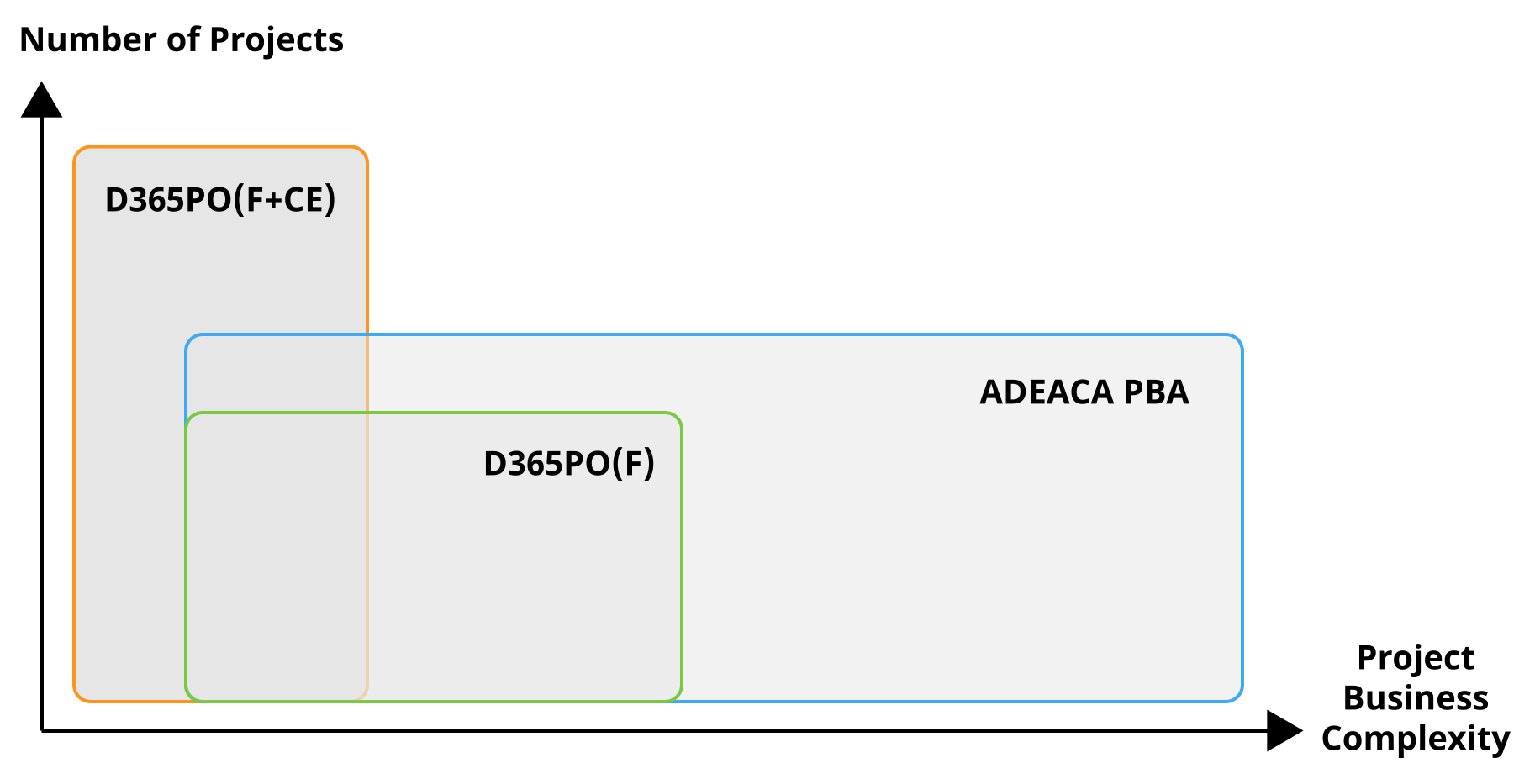
Although every organization’s needs are different and there are degrees of complexity, the bottom line is: Project Operations only works for relatively simple, short projects encountered in very few companies. Plus, why would you want to limit your options in the future as you continue to grow. The more complex your projects become, the more you will be stuck in a stale system.
Project “Operations” vs “Financials”
As the name says, Project Operations is focused primarily on the operational side of project management.
However, if you need to manage the financial side of your projects under tight budget control and change management, you will need more. If you need a dedicated cost breakdown structure (CBS), hierarchical budget management, support for your month-end process, or earned value analysis (EVA), you will not find them in Project Operations at all. If you need any of the following, you will need to employ another solution or carry a significant workload of your project business management in spreadsheets.
- Estimate at Completion (EAC)
- Automatic and manual EAC adjustment
- Set EAC based on WBS estimates
- EAC revision control and
- Workflow approval of EAC changes
- EAC variance and margin
- EAC based cash-flow projections
- EAC based revenue recognition
- Cost analysis by CBS
- Cost analysis by category and category group
- Cost analysis by cost code
- Deliverables completion tracking
- Productivity analysis
- Budget periods and trend analysis
- Hierarchy costing (embedded projects)
Check out this updated comparison: Dynamics 365 Project Operations vs. PlanAutomate
Review Your Needs
To summarize, take a look at these three categories to determine if Project Operations will support your business.
- Are you a services-based organization?
- Are your projects simple and short in duration?
- Are you happy running your project financials and cost management in spreadsheets?
- Will your organization not grow or need any new capabilities in the future?
If you answered yes to all four questions, then Project Operations may work for you.
If you answered anything other than yes, you need to explore other options. However, buying Dynamics and expecting to make custom modifications to it to suit your business needs is not the right way to go either. This approach will cost you more in the long-run and causes massive headaches and problems keeping up with Microsoft’s cloud deployment timeline. You need a ready-built, project business solution.
Looking for ways to improve your Dynamics dashboards with Power BI? Take a look at our Power BI project management dashboard examples.

Don’t Accept the Status Quo
Unfortunately, most Project Businesses run their companies through a mess of disconnected, disparate applications. Most don’t even look for a comprehensive business system because they don’t believe it exists, or that “this is the way we have always done it.”
You need to search for more. Don’t accept the status quo.
Don’t buy a business system if it doesn’t support your whole business. If an application only covers a small portion of your needs but you still need to support the bulk of your processes with ancillary apps, tools and spreadsheets, or make massive custom modifications to it, keep looking.
If your goal is to eliminate the need for those spreadsheets and ancillary applications and be able to manage your project business in one comprehensive business system, then PlanAutomate may be right for you.
